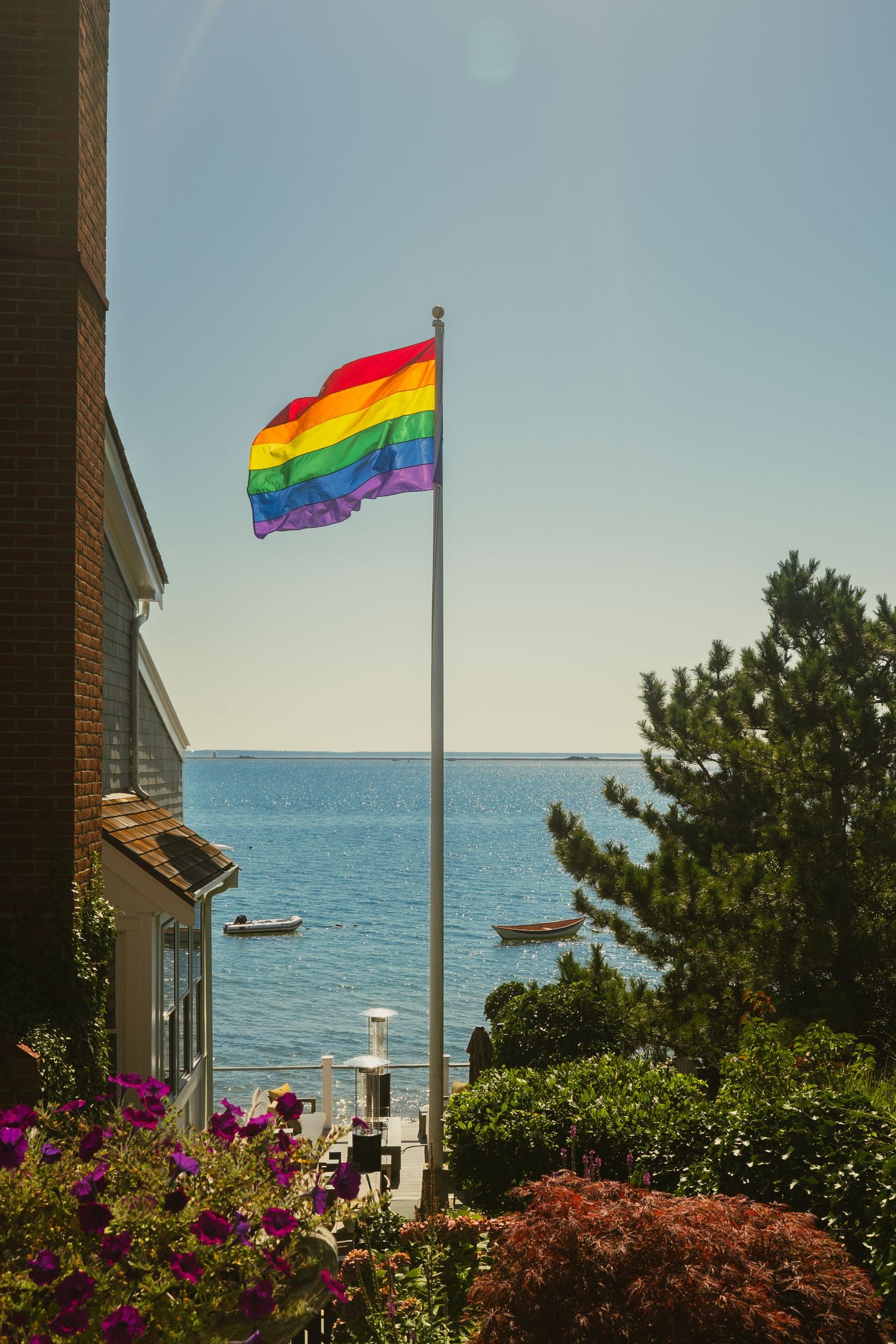
This weekend, as I celebrated Independence Day and the United States' 250th birthday, I sat on Hope St. in Bristol, RI, home to the country's longest-running Fourth of July parade. I sported white shorts, a blue American flag shirt, and a red hat with white lettering; something that would imply a certain political affiliation in 2026. My hat sported writing that read: "WE THE PEOPLE MEANS EVERYONE", accompanied by a small pride flag below the lettering. An intentional stylistic choice I made, that day.

My neighbors and I all sat baking in the nearly 100 degree heat, waiting for the parade to start, when I was approached by a journalist with the New York Times, who had his gaze locked on my hat as he approached. He stated he was interviewing Americans for the holiday, and he'd like to know my take on what it means to be an American. My response was that I felt indifferent. I am happy to live in this country and I love my country, but that I was nervous for the way things were headed, and the current state of things. And that I was there to celebrate the current freedoms I had in present time. I say that, not to sound hyperbolic, but as a member of the LGBT+ community that is currently under the bullseye of President Trump and his administration.
I have watched as rights of my fellow community members have changed, shifted, and been removed, and I wonder "am I next"? Not because I choose to live my life in fear, but because I see it happening, and with the rise of nationalism, more specifically Christian nationalism, there are many Americans who want to actively roll back my rights and protection.
And so, today I felt compelled to write about a topic that has weighed on my mind heavy over recent years, and that is the rise of nationalism in the United States. I'd like to first start with some definitions before we move further.
patriotism (noun): love for or devotion to one's country
nationalism (noun): an ideology that elevates one nation or nationality above all others and that places primary emphasis on promotion of its culture and interests as opposed to those of other nations, nationalities, or supranational groups
chauvinism (noun): excessive or blind patriotism
fascism (noun): a populist political philosophy, movement, or regime (such as that of the Fascisti) that exalts nation and often race above the individual, that is associated with a centralized autocratic government headed by a dictatorial leader, and that is characterized by severe economic and social regimentation and by forcible suppression of opposition
Great, now that that's out of the way, all of the self-proclaimed "patriots" that are actually nationalists can set down their torches. I'm a patriot, too. I love my country, I support and am thankful for the service provided by our nation's military, and first responders. But it is because I love my country that I am saddened by the rise in nationalism in the United States. It is because I love my country I am worried about the rollback of equitable laws and protections, and it is because I love my country that I am outspoken against the rise of fascist behavior of the current administration. But much of that is a story for another day and another writing session.
But overall, it is the love I have for my country that I fear the rise of nationalism. Both the words "patriotism" and "nationalism" are used in such a vague way, that it's difficult to draw a clear difference between the two. As George Orwell writes in "Notes on Nationalism"; "By ‘patriotism’ I mean devotion to a particular place and a particular way of life, which one believes to be the best in the world but has no wish to force on other people. Patriotism is of its nature defensive, both militarily and culturally. Nationalism, on the other hand, is inseparable from the desire for power. The abiding purpose of every nationalist is to secure more power and more prestige, not for himself but for the nation or other unit in which he has chosen to sink his own individuality."
And it is important to recognize this distinction. As I watched the paradegoers trek to their spots to watch the parade, the fashion sense was overwhelmingly patriotic. But, every once and a while, fashion would come along that was deeply and clearly what one would describe as "nationalist". As a nation, the more we try to push the fact that we are superior to other nations around the world, the more nationalism spreads.
Britannica writes about it in "Nationalism vs. Patriotism: What’s the Difference?", where they mention the following: "Patriotism traditionally involves a civic spirit and a willingness to sacrifice for the common liberty of a political community. It is often linked to political virtues and the preservation of political liberty. Nationalism, however, is more about a spiritual attachment to the nation, emphasizing cultural unity and distinctiveness. It often involves a desire for a separate and independent nation, driven by a shared culture, history, and language. This can sometimes lead to a belief in the superiority of one’s nation over others, which is a key distinction from patriotism."
It is no secret that I am a leftist in my beliefs. I hold myself to a high moral standard that I cannot compromise on, and so, I happen to fall in with leftist politics. But, I am no stranger to uncomfortable conversation and disagreeance with my fellow Americans. Conversation is how we progress and teach each other, how we garner empathy for and from our fellow citizens, and how we expose people to beliefs and ideas that are foreign to them. If you put me in a room with a stark republican, I believe if that person were a true "patriot", we would leave that room with some common ground and understanding. If that person were a nationalist, which in my experience, makes up a great deal of the MAGA republican party's "patriots" today, we would both leave that room not agreeing on anything much, and the nationalist would leave the room believing I hate my country.
And I think this is the major difference between nationalism and patriotism. Patriotism can be a unifying force and can foster a sense of solidarity among citizens. Nationalism on the other hand is polarizing, divisive, and can bring rise to chauvinism, and directly combats the idea that human beings have equal moral worth; amongst different cultures, genders, or even zip codes.
When we settle into nationalism, we become blind from not only the wrongdoings of our country's actions to other nations, but of our country's wrongdoings against its own people. As Sydney J. Harris wrote wonderfully: "The difference between patriotism and nationalism is that the patriot is proud of his country for what it does, and the nationalist is proud of his country no matter what it does; the first attitude creates a feeling of responsibility, but the second a feeling of blind arrogance that leads to war.” A jarring truth that has much relevance in 2026, as the United States' involvement with Iran remains unresolved. A direct example I have of this is nationalists in my direct circle who, prior to the election, said they were voting for Trump because he "puts America first", and we "won't be wasting money overseas". Those same folks celebrated and applauded our president's disastrous behavior in the middle east, which has led to the death of 13 service members, and the injury of many more. It is a blind faith to the country and its leadership. Something we will touch on later!
If you also feel a sense of division in your inner circles, family, or other close-knit connection, you are not alone. Gallup has reported that patriotism in America has hit as 25-year record low. People are disappointed in their country and losing hope. But the big divide, yet again? Partisan gap and extremism. Extreme national pride fell from 41% in 2025 to 33% in 2026, an 8-point drop, with a widening partisan gap: 70% of Republicans express extreme pride versus 28% of independents and 14% of Democrats, both record lows.
PRRI has an interesting survey report about nationalism, more specifically Christian nationalism, where their findings stated that roughly one-third of Americans qualify as Christian nationalism Adherents (11%) or Sympathizers (21%), and a majority of Republicans fall into one of those two categories. Even more interesting? Biased media also plays a role, as two-thirds of Americans who most trust far-right news sources qualify as Christian nationalism Adherents (34%) or Sympathizers (31%), as do a majority of those who most trust Fox News (18% Adherents and 37% Sympathizers). This is why I think it is so important to read, read, and read. You cannot trust the word of the first news article you see, no matter the source. You must verify information and keep yourself informed.
And extremism on blind support of the country isn't the only thing on the rise; Statista's nationalism topic page reports that the growth in hate groups rose from 457 in 1999 to roughly 733 by 2021.
Why is this all so? Our 45th and 47th president, Donald J. Trump. Time writes about connecting white Christian nationalism to Trump's bond with his base in their article: "Trump’s Christian Nationalist Vision for America", where they highlight: "This perplexing outcome is revelatory. Trump’s cavalier treatment of this supposedly sacred issue has exposed the Republican Party’s best kept secret: The connection between Republican voters and their leaders was never primarily about abortion. Rather, as Trump’s “Make America Great Again” (MAGA) transformation of the party reveals, Trump’s bond with his supporters is forged from different material: namely, his militant mission to return power to white Christian America."
Don't believe me? It is currently infiltrating the United States military; where the separation of church and state continues to fade. Pete Hegseth, the Secretary of War (formerly Defense), recently invited Pastor Doug Wilson to give a sermon at the Pentagon in February as part of Hegseth's monthly Christian worship service. NPR actually just did an interview with him today (July 7th, at the time of my writing), where they note: "Wilson is a self-described Christian nationalist who wants to repeal a woman's right to vote, has defended slavery and believes homosexuality should be a crime. His beliefs are extreme, and not long ago they were considered fringe. But today, Wilson's teachings are entering the mainstream, according to religion and history scholars, including Kristin Kobes Du Mez, author of Jesus and John Wayne."
The list goes on and on about the increase in Christian nationalism in the United States. USA Today writes about this in their article "Christian nationalism in the State of the Union? Trump's speech unpacked", which documents the religious-nationalist rhetoric directly: Trump's speech invoked national destiny written by Providence, which the Freedom From Religion Foundation characterized as updated manifest destiny, and efforts to expand religion's public role have become a cornerstone of the second term.
Now I said I would touch on this, and as I continue to write and become hungry for lunch, I want to wrap up on a note about personalism. The New Republic makes the provocative case that Trumpism today is not genuinely nationalist at all but personalist, with Trump himself as the object of reverence rather than any American ideal. You can read about that in their article: "Trump’s “Christian Nationalism” Is Neither of Those Things". A challenge to what I have just written about above, but compelling, nonetheless. Perhaps the truth of what is going on is somewhere in the middle of all of it. That is up for you to decide.
Before I go make lunch, I would like to leave you with a few of my favorite images I have captured of our Old Glory (that is the flag!!). Scroll and ponder at your leisure. These photos all have backstories, but I think part of what makes art so compelling is the thinking we must do ourselves when trying to digest art with no explanation. So, I have opted out of including those backstories today.
Stay creative,
Nico
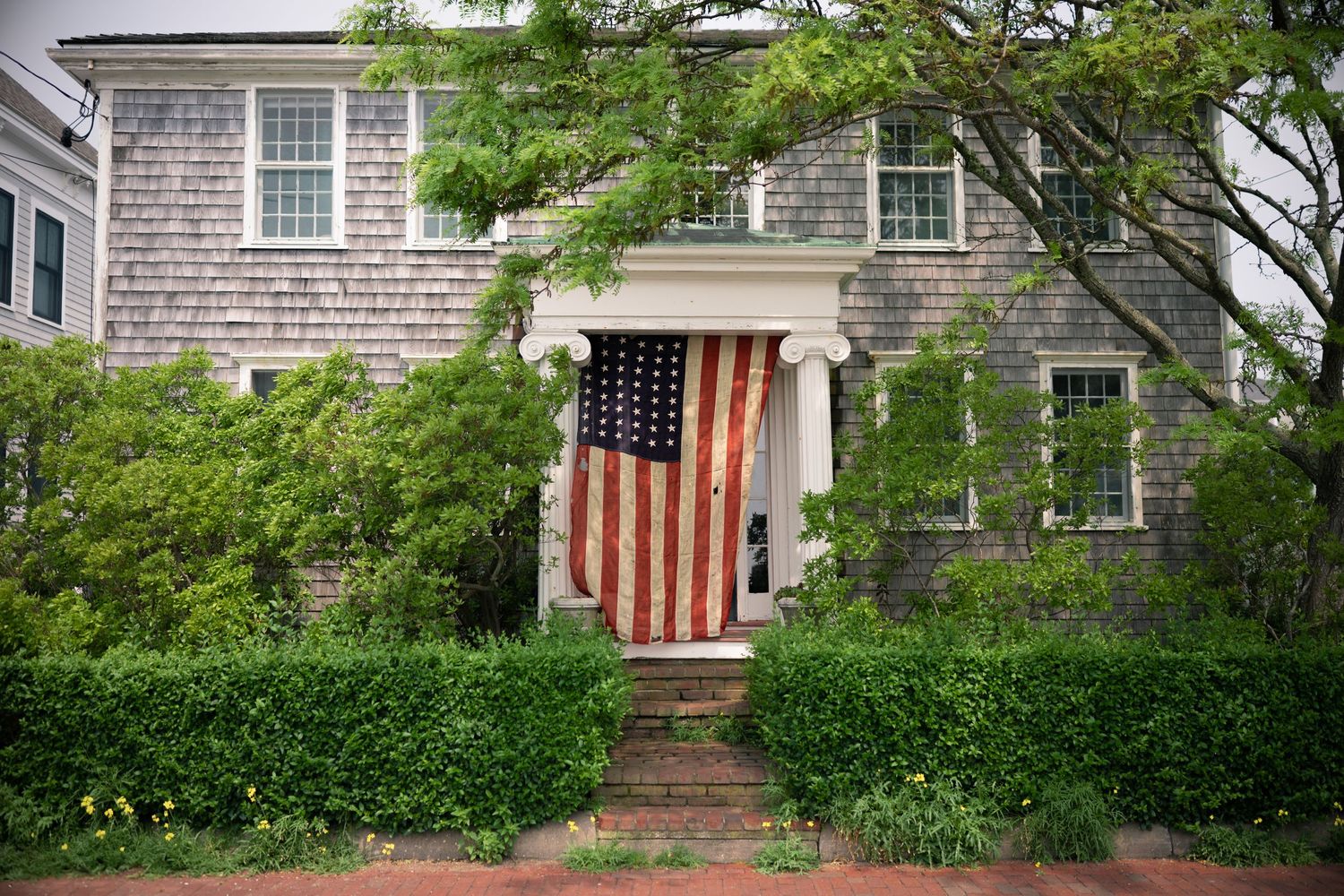
State of the Union, 2025
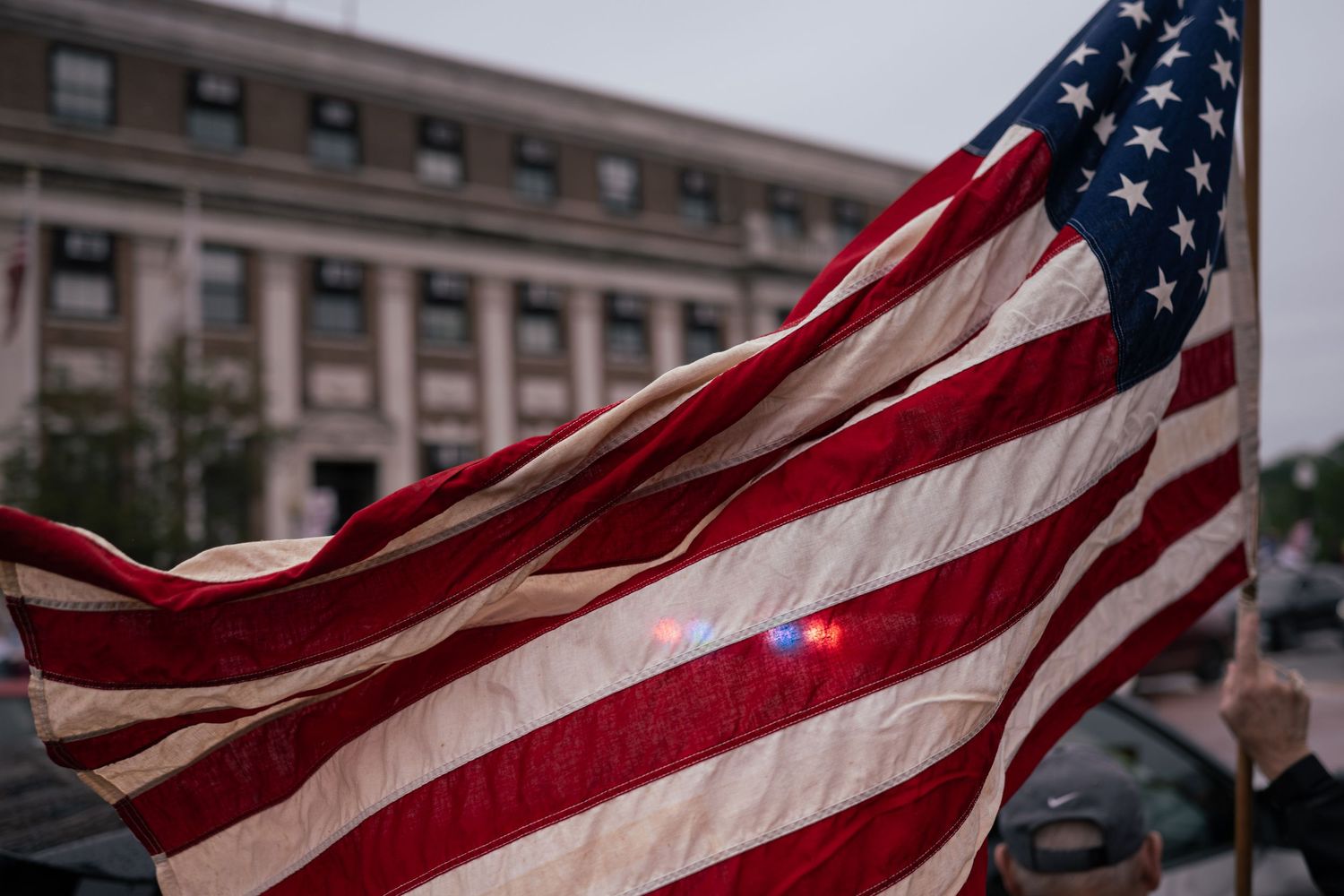
What Bleeds Through, 2025
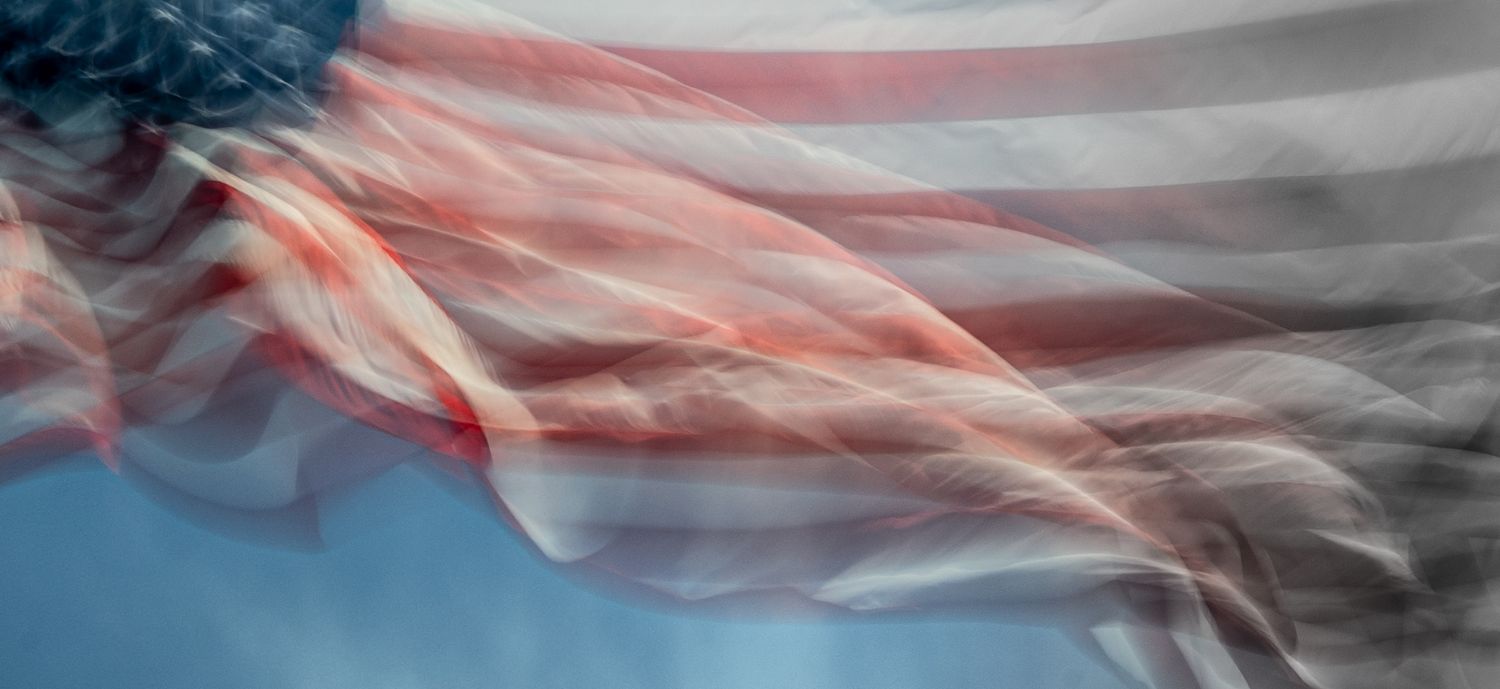
American Requiem, 2026
Works cited
"American Pride Falls to 25-Year Record Low." Gallup, 29 June 2026, news.gallup.com/poll/711938/american-pride-falls-year-record-low.aspx.
"Chauvinism." Merriam-Webster.com Dictionary, Merriam-Webster, www.merriam-webster.com/dictionary/chauvinism. Accessed 7 July 2026.
Fadel, Leila. "Pastor Doug Wilson on His Christian Theocracy Vision and Ties to Pete Hegseth." NPR, 6 July 2026, www.npr.org/2026/07/06/nx-s1-5822558/pastor-doug-wilson-interview-pete-hegseth.
"Fascism." Merriam-Webster.com Dictionary, Merriam-Webster, www.merriam-webster.com/dictionary/fascism. Accessed 7 July 2026.
Ford, Matt. "Trump's 'Christian Nationalism' Is Neither of Those Things." The New Republic, 4 June 2026, newrepublic.com/article/211274/trump-christian-nationalism-corrupt-administration.
Frank, BrieAnna J. "Christian Nationalism in the State of the Union? Trump's Speech Unpacked." USA Today, 27 Feb. 2026. AOL, www.aol.com/articles/christian-nationalism-state-union-trumps-010431106.html.
Jones, Robert P. "Trump's Christian Nationalist Vision for America." Time, 10 Sept. 2024, time.com/7019236/trumps-christian-nationalist-america-essay/.
The New York Times, 5 July 2026, www.nytimes.com/2026/07/05/us/america-250-celebrations.html.
"Mapping Christian Nationalism Across the 50 States: Insights from PRRI's 2025 American Values Atlas." PRRI, 18 Feb. 2026, prri.org/research/mapping-christian-nationalism-across-the-50-states-insights-from-prris-2025-american-values-atlas/.
"Nationalism." Merriam-Webster.com Dictionary, Merriam-Webster, www.merriam-webster.com/dictionary/nationalism. Accessed 7 July 2026.
"Nationalism in the U.S. - Statistics & Facts." Statista, www.statista.com/topics/5306/nationalism-in-the-us/. Accessed 7 July 2026.
"Nationalism vs. Patriotism: What's the Difference?" Encyclopaedia Britannica, www.britannica.com/topic/Nationalism-vs-Patriotism-Whats-the-Difference. Accessed 7 July 2026.
O'Donnell, Wes. "What's the Difference Between Patriotism and Nationalism?" WesODonnell.com, 24 Mar. 2026, www.wesodonnell.com/p/whats-the-difference-between-patriotism.
Orwell, George. "Notes on Nationalism." Polemic, 1945. The Orwell Foundation, www.orwellfoundation.com/the-orwell-foundation/orwell/essays-and-other-works/notes-on-nationalism/.
"Patriotism." Merriam-Webster.com Dictionary, Merriam-Webster, www.merriam-webster.com/dictionary/patriotism. Accessed 7 July 2026.